

Early skin cancer detection matters because it gives treatment the best chance to work before a lesion grows deeper or spreads.
In practice, it means combining regular self-checks with a professional skin exam, such as dermoscopy or full-body mole mapping, so changes get caught while they are still small.
TL;DR
- Early skin cancer detection improves outcomes because shallow, localized lesions are generally easier to manage than ones caught later.
- Self-checks using the ABCDE rule are a good starting point, not a replacement for a professional exam.
- Professional screening adds tools most people do not have at home: dermoscopy and total body photography.
- AI skin-scanning apps can support awareness but are not a substitute for a clinical assessment.
- At South London Mole Clinic, our nurse practitioner-led IntelliStudio mole mapping gives you a documented, comparable baseline of your skin.
Why Does Early Detection Matter So Much for Skin Cancer?
Early detection matters because skin cancer, unlike many internal cancers, is often visible before it becomes advanced.
That visibility is an advantage, but only if someone is actually looking closely and consistently.
- Skin sits on the surface, so changes can be seen and photographed directly.
- A lesion caught while it is thin and localized is generally more straightforward to manage than one caught after it has grown or changed shape.
- Waiting for symptoms like pain or bleeding often means the lesion has already progressed past its earliest stage.
How Timing Affects Treatment and Outcomes
Timing matters because the depth and spread of a lesion at the time it is found often shapes what happens next.
This is general clinical reasoning, not a promise about any individual case.
- A small, contained lesion may involve a more limited procedure.
- A lesion found later may need more extensive assessment or referral.
- Suitability for any specific treatment always depends on an in-person clinical evaluation, not a blog post.
Why Skin Cancer Is Often Easier to Catch Early Than Other Cancers
Skin cancer has a practical advantage: you can see it. That is not true for most cancers that start inside the body.
- Regular visual tracking, done consistently, can catch changes that would otherwise go unnoticed for months.
- This is exactly why photographic comparison tools, like mole mapping, exist, they replace memory with an actual record.
Pro tip: if you have ever tried to remember whether a mole “looked like that last year,” you already understand why a photographic baseline is more reliable than memory alone.
What Actually Counts as “Early” Detection?
“Early” means catching a change while a lesion is still small, flat, or newly evolving, not waiting until it becomes symptomatic. It is a relative term, not a fixed deadline.
- Early does not mean “no risk,” it means “found sooner, when there are typically more options.”
- A mole that has been stable for years is a different situation than one that has changed in the last few months.
- Consistency in checking matters more than any single appointment.
The Difference Between Noticing a Change and Catching It Early
Noticing a change often happens by chance. Catching it early happens through a deliberate process.
- Example: someone glancing in the mirror might notice a mole “looks a bit different” but cannot say exactly what changed or when.
- With a documented baseline, that same change can be confirmed precisely: size, shape, or color shift, compared side by side.
- This is the practical difference between casual awareness and structured monitoring.
How Is Early Skin Cancer Detection Actually Done? Self-Exams vs Professional Screening
Early skin cancer detection combines two layers: what you can check yourself, and what a trained clinician or imaging system can check more precisely. Neither layer replaces the other.
| Method | What it catches | Limitation |
|---|---|---|
| Self-exam (ABCDE) | Obvious changes you notice yourself | Relies on memory and visibility of hard-to-see areas |
| Professional visual exam | Trained clinical judgment | Still a single point in time without photos |
| Dermoscopy | Magnified detail beneath the surface | Best used on a specific lesion of concern |
| Total body photography / mole mapping | A documented baseline for comparison over time | Not diagnostic on its own, works alongside a clinical exam |
The ABCDE Rule for Checking Your Own Skin
The ABCDE rule is a simple framework for noticing which moles are worth a closer look. It is a starting point, not a diagnosis.
- Asymmetry: one half does not match the other.
- Border: edges are ragged, notched, or blurred.
- Colour: multiple shades of brown, black, red, or white.
- Diameter: larger than about 6mm.
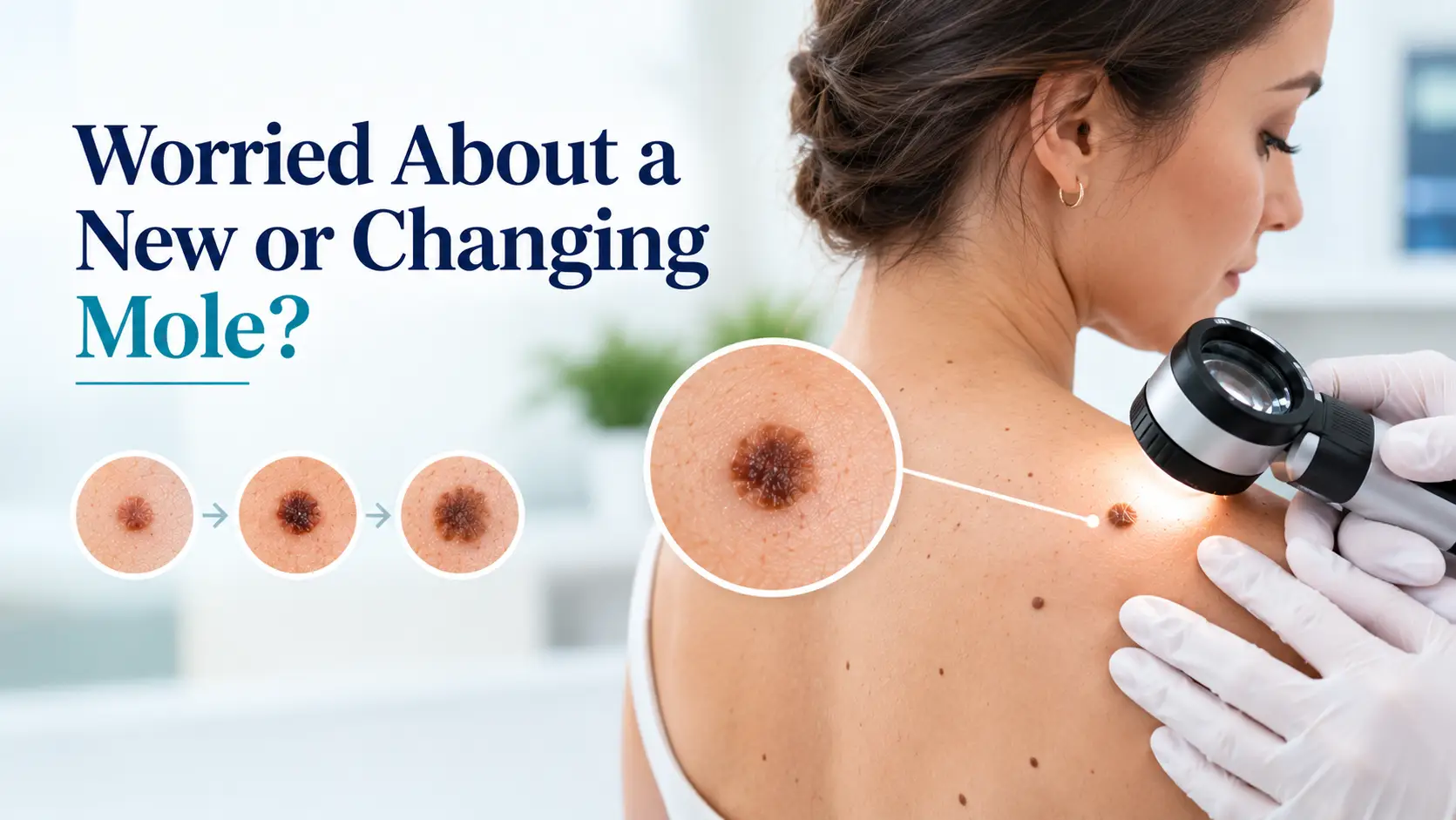
- Evolution: any change in size, shape, colour, or new symptom.
What a Professional Skin Check Adds That a Self-Exam Can’t
A professional check adds trained judgment and tools that a mirror cannot provide. This is where the “how it’s actually done” part of detection becomes real.
- Clinicians are trained to spot subtle patterns that are easy to miss without experience.
- Hard-to-see areas, like your back or scalp, get proper attention.
- Dermoscopy and photography add detail and documentation self-exams cannot capture.
What Happens During a Professional Skin Cancer Screening?
A professional skin cancer screening generally combines a visual exam with tools that add magnification or a permanent photographic record.
What exactly happens can vary by clinic and by what your provider recommends.
- The clinician reviews your skin history and any specific concerns first.
- Any mole that stands out gets a closer look.
- If appropriate, images are taken for future comparison.
Visual Exam and Dermoscopy
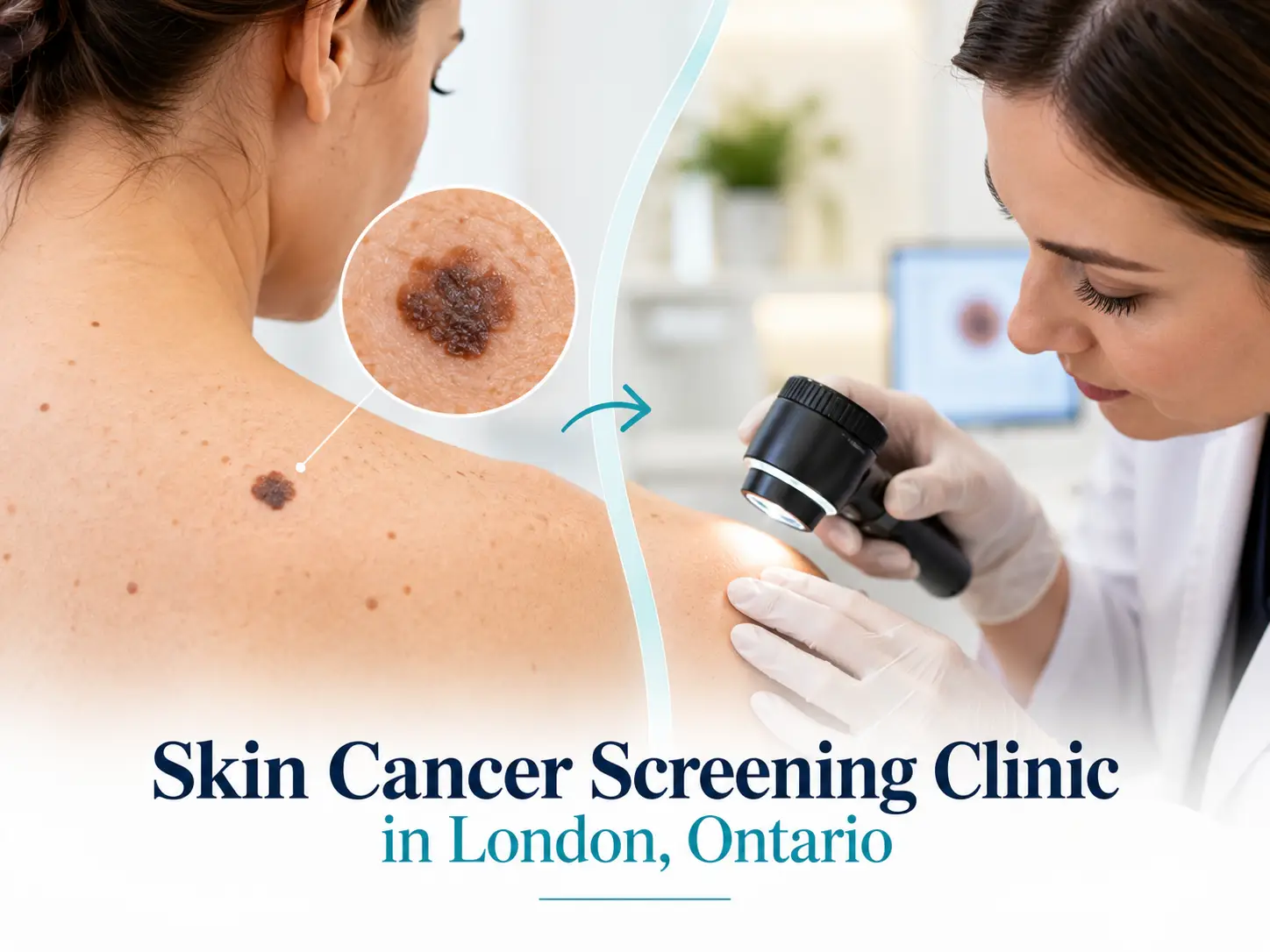
A visual exam is the clinician looking at your skin directly, often followed by dermoscopy for a closer look at a specific lesion.
Dermoscopy uses magnification to see structures beneath the surface that are not visible to the naked eye.
- This step is quick and non-invasive.
- It is most useful when there is already a specific mole of interest.
Total Body Photography and Mole Mapping
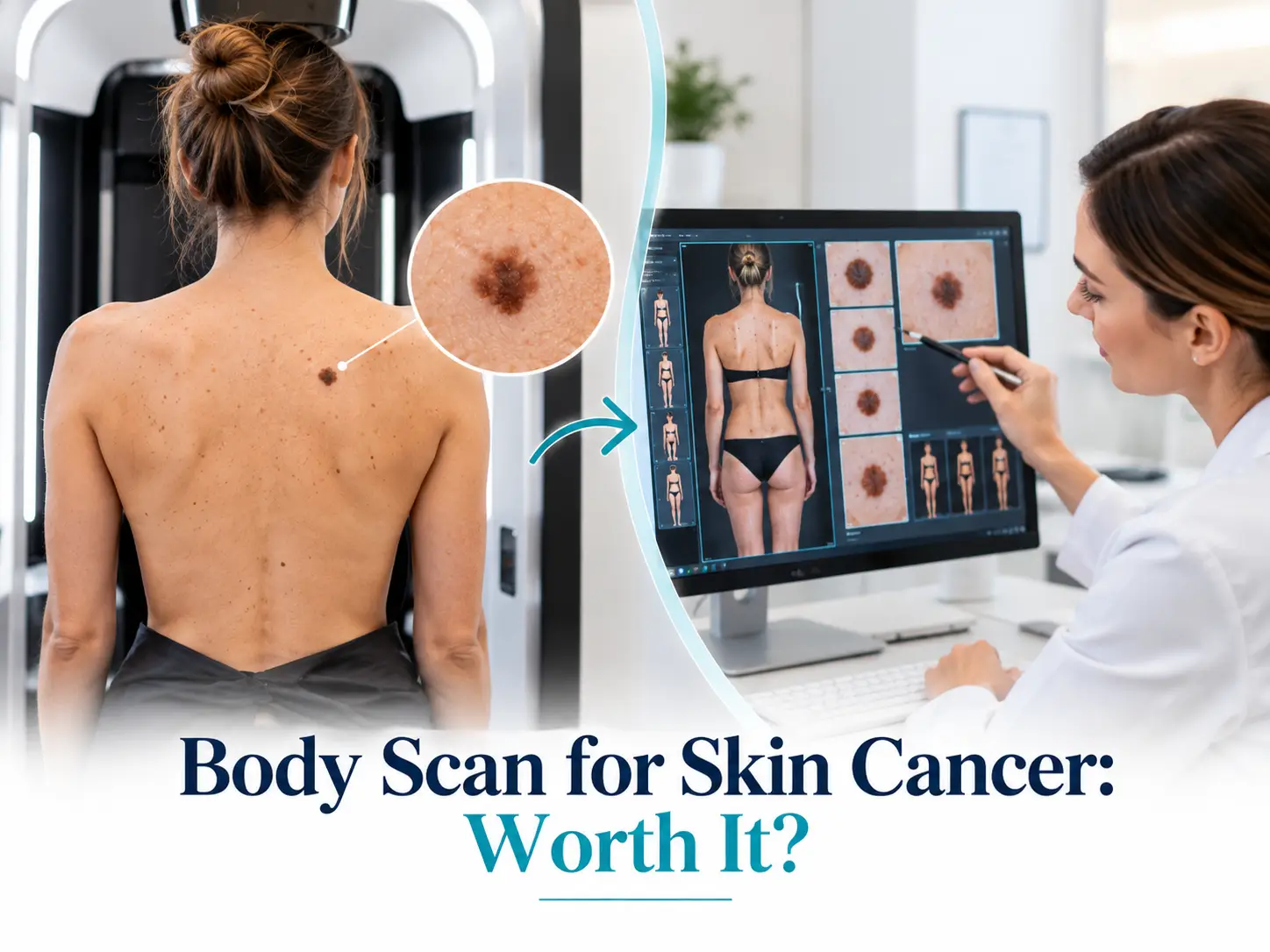
Total body photography, also called mole mapping, photographs your entire skin to build a baseline that future visits compare against.
This is where “catching it early” becomes a structured process rather than a hopeful guess.
- High-resolution images are taken of your entire body.
- Any atypical-looking mole is documented with a closer dermoscopic image.
- At your next visit, new images are compared side by side with your baseline, so new or changing moles stand out clearly.
Pro tip: mole mapping is a monitoring tool, not a diagnostic test. If something looks concerning during your session, your provider will explain what the appropriate next step is, which may include a referral.
Who Should Prioritize Early Detection?
Some people benefit from a more structured approach to skin monitoring because their baseline risk is higher. This is general guidance, not a personal risk assessment.
Consider prioritizing regular screening if any of the following applies to you:
- You have 50 or more moles, or moles that look large or irregular.
- You or a close relative has had melanoma or another skin cancer.
- You have fair skin, freckles, or red hair, and burn easily.
- You had significant sun exposure as a child, past sunburns, or used tanning beds.
- You have moles in spots that are hard to watch yourself, like your back or scalp.
- Your immune system is weakened, or you take medication that lowers it.
Whether you fall into a higher-risk category, and how that should shape your screening plan, is best discussed directly with a clinician.
Are AI Skin-Scanning Apps a Substitute for Professional Screening?
AI skin-scanning apps can be a useful awareness tool, but they are not a substitute for a professional exam. This distinction matters because overselling these tools can delay proper care.
- Apps can help someone notice a mole is worth attention.
- They do not replace clinical judgment, dermoscopy, or a documented, comparable baseline.
- Accuracy varies by app, lighting, and image quality, none of which are controlled the way a clinical session is.
If an app flags something, or you are simply unsure, that is a reason to book an in-person assessment, not a reason to wait and monitor it yourself indefinitely.
How Often Should You Be Screened?
How often you should be screened depends on your personal risk level, and a clinician is best placed to set that schedule. General patterns look like this:
- Higher risk (personal or family history of melanoma, many atypical moles): often every 6 months.
- Moderate risk (many moles, significant sun exposure history, fair skin): often annually.
- Lower risk (few moles, no strong risk factors): a periodic self-check plus an occasional professional visit may be enough.
These are general patterns, not a fixed rule. Your own interval should come from a conversation with your provider.
What Does Early Skin Cancer Detection at South London Mole Clinic Involve?
At South London Mole Clinic, early skin cancer detection is supported through nurse practitioner-led mole mapping using our IntelliStudio imaging system.
The clinic was founded by Pinkal Gandhi, and every session is delivered under that same nurse practitioner-led model.
- We talk through your skin history and any concerns first.
- IntelliStudio captures high-resolution photos across your skin.
- Any mole worth a closer look gets polarised light dermoscopy.
- Your images become a private, secure baseline for comparison at future visits.
How IntelliStudio Mole Mapping Supports Early Detection
IntelliStudio supports early detection by making comparison objective instead of relying on memory. Because every visit is photographed the same way, small changes that are easy to miss by eye show up clearly on screen.
- A full digital skin imaging appointment is $695 + HST.
- Most sessions run about 30 to 45 minutes.
- Payment is taken at booking, since this is a private service and not covered by OHIP.
For a full breakdown of what a session includes, see our Mole Mapping and Digital Skin Imaging page.
No Referral Needed to Get Started
You do not need a referral to book mole mapping at our clinic. You can book directly, and if anything needs further medical attention, our team will explain the appropriate next step.
What to Do If You Notice Something Concerning Right Now
If a mole is actively bleeding, growing quickly, or has changed noticeably in recent weeks, book an in-person assessment rather than waiting for a scheduled mole mapping session. Mole mapping is a monitoring tool, it is not designed to replace prompt evaluation of an active concern.
- New, rapidly changing, painful, or bleeding moles deserve direct attention.
- Do not wait for your next planned visit if something feels urgent.
- This page is general information, not medical advice, and does not replace a clinical consultation.
Frequently Asked Questions
Why does early skin cancer detection matter?
Catching changes while a lesion is still small and localized generally gives more options than waiting until symptoms appear. Suitability for any specific treatment path always depends on a clinical evaluation.
What is the difference between a self-exam and mole mapping?
A self-exam relies on your own eyes and memory using the ABCDE rule. Mole mapping creates a photographic baseline that a clinician can compare precisely at future visits.
Can an app replace a professional skin check?
No. AI skin-scanning apps can raise awareness, but they do not replace dermoscopy, clinical judgment, or a documented baseline from a professional session.
How often should I get screened for early detection?
It depends on your personal risk factors. Higher-risk patients often screen every 6 months, while lower-risk patients may screen annually or rely more on self-checks.
Do I need a referral for mole mapping at South London Mole Clinic?
No. You can book a mole mapping appointment directly online without a referral from a family doctor.
Take the Next Step Toward Early Detection
Understanding why early detection matters is the first step. Acting on it with a documented, comparable baseline is what actually puts that understanding into practice.
- Read more about what a session involves on our Mole Mapping and Digital Skin Imaging page.
- Book your appointment directly online, no referral required.
- Questions first? Call us at (519) 800-4518 or email info@southlondonmoleclinic.ca.
This article is general information, not medical advice. Whether a particular screening approach is right for you depends on a clinical consultation with a qualified provider.



Leave A Comment