
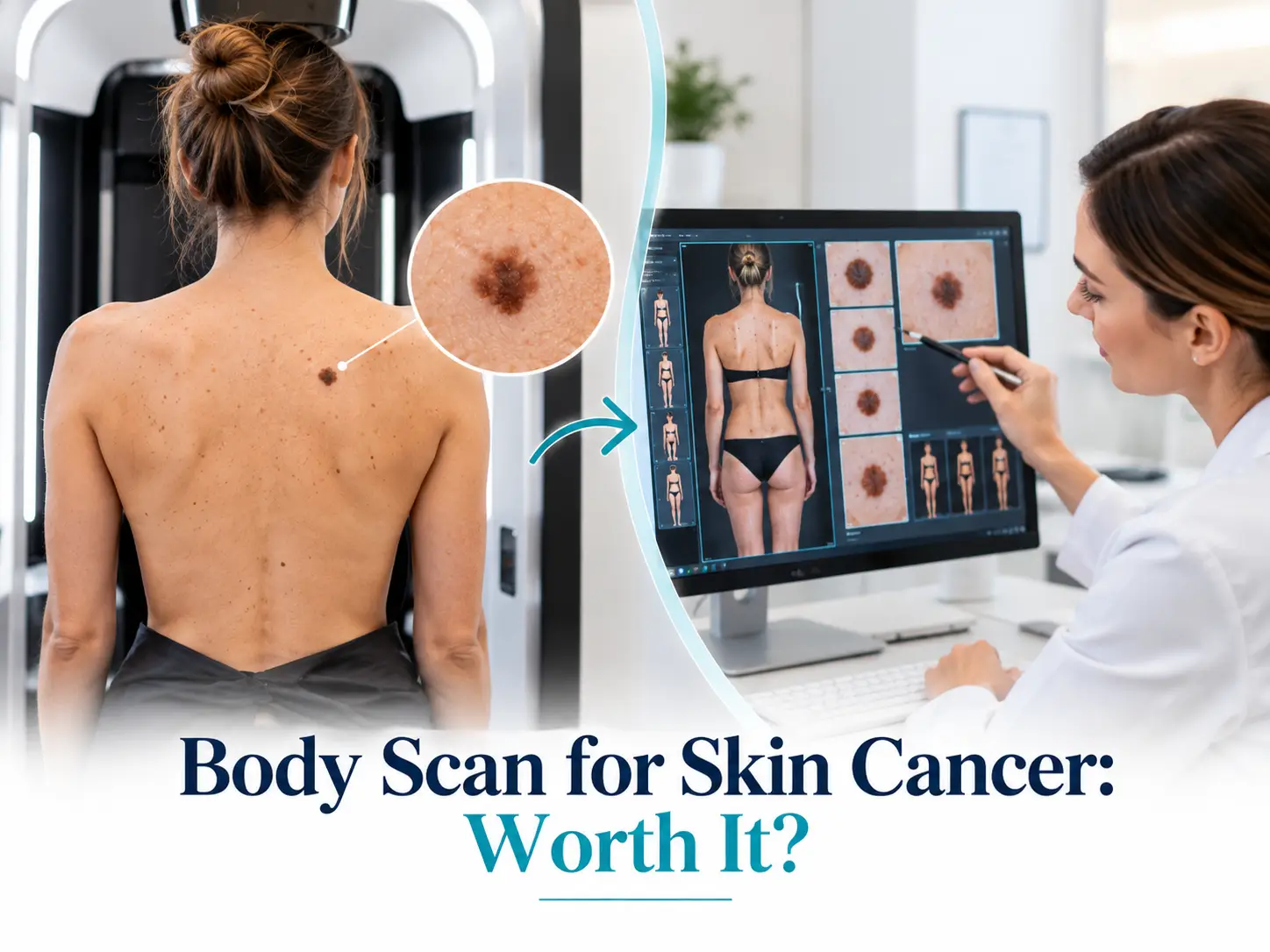
A body scan for skin cancer is worth it if you have risk factors or many moles to track and want a photo record your clinician can compare over time. It supports early detection of change, but it cannot diagnose or rule out skin cancer on its own.
Reviewed by the nurse practitioner team at South London Mole Clinic, London, Ontario. Last updated: 02/10/2026
TL;DR
- A “body scan” for skin cancer means total body photography plus close-up dermoscopy. It uses no radiation and is not a CT or MRI.
- It tracks change. A clinical exam and biopsy still decide whether a mole is cancer.
- It may help most if you have 50 or more moles, a family history of melanoma, or skin that burns easily.
- It is a private service in Ontario. OHIP does not cover it, and some extended health plans may.
- At South London Mole Clinic, you can book without a referral.
Is a digital skin scan worth it for you? A quick check
Use this as a starting point, then talk with a clinician.
| Your situation | What it may mean |
|---|---|
| You have several risk factors (many moles, family history, fair skin, past sunburns) | A scan may be worth discussing |
| You have a few risk factors or moles in hard-to-see spots | It may help, depending on your goals |
| You have few moles, no family history and no changes | Self-checks and routine exams may be enough |
| You have a mole that is changing, bleeding or growing right now | Book an in-person exam first |
Important: Do not wait for a baseline scan if a spot is new, changing, bleeding, painful or growing fast. Get it assessed in person promptly.
What is a body scan for skin cancer?
A body scan for skin cancer is a set of detailed photos of your skin, taken so a clinician can compare them at future visits.
Nothing enters your body, and no radiation is involved.
At South London Mole Clinic, we call this mole mapping and digital skin imaging. Different clinics use different names, so the table below helps.
Body scan, mole mapping, skin exam and biopsy: what is the difference?
| Term | What it is | Can it diagnose? |
|---|---|---|
| Digital body scan or mole mapping | Skin photos plus dermoscopy, saved as a baseline | No |
| Clinical skin exam | A clinician checks your skin in person | Can raise concern |
| Biopsy | A small sample of a mole is tested | Yes |
| Mindfulness “body scan” | A relaxation exercise | Unrelated to skin |
Is it the same as a CT, MRI or PET scan?
No. Those imaging tests look inside the body. A digital skin scan looks at the surface of your skin and the top layers visible under dermoscopy. They answer different questions.
What does our scan include?
- High-resolution total body photography
- Polarised light digital dermoscopy, which looks just beneath the surface of a mole
- Side-by-side comparison at every visit
- Secure, private image storage
Can a body scan detect skin cancer?
A body scan can help your clinician notice a suspicious change, but it cannot confirm cancer. Only a biopsy can do that.
Our service page is clear on this point. Mole mapping is a monitoring and record keeping tool, not a diagnostic test.
1. What imaging can show
- New moles that appeared since your last visit
- Changes in the size, shape or colour of an existing mole
- Features under magnification that are hard to see by eye
2. What only a biopsy can answer
- Whether a mole contains cancer cells
- What type of skin cancer it is, if any
If a mole looks suspicious, your nurse practitioner will walk you through next steps. That may include a biopsy or a referral.
Does every skin cancer start as a mole?
No. Some skin cancers appear as a new bump, a scaly patch or a sore that does not heal. Mole mapping mainly follows moles and pigmented spots.
Pro tip: Tell your clinician about any non-mole skin change, even if it seems minor.
Does a clear scan mean you are cancer-free?
No. A scan shows your skin at one point in time. New spots can appear later, which is why follow-up visits and self-checks still matter.
How does digital mole mapping work?
Mole mapping works by comparing today’s images with your earlier ones. That comparison makes change easier to see than memory alone.
Step 1: Your baseline
- At your first visit, we photograph your skin and capture close-ups of moles worth a closer look.
- Those images become your personal baseline.
Step 2: Follow-up comparison
At later visits, we line up new images against your baseline. Because every visit is photographed the same way, small shifts show up clearly on screen.
Example scenario (illustrative): A person with many moles on their back sees nothing unusual in the mirror. At a follow-up visit, side-by-side images show one mole has changed shape. The nurse practitioner reviews it and explains the next step.
How do automated mole mapping systems help with early melanoma detection?
Automated imaging systems keep photos consistent and store them for comparison. That helps your clinician spot change. They do not replace clinical judgment.
At South London Mole Clinic, our IntelliStudio system captures the images, and your nurse practitioner goes through them with you.
Do AI-powered body scans improve skin cancer diagnosis?
AI tools for skin images exist, and research on them continues. Reported accuracy varies by tool and study, and results from controlled tests may differ in everyday clinics.
Most experts see these tools as an aid to a trained clinician, not a replacement. Ask any clinic who reviews your images and who decides what happens next.
Is a full-body digital skin scan worth it?
It may be worth it if you carry risk factors or struggle to track your own moles. For people at lower risk, regular self-checks and routine exams may be enough.
Benefits and limits
| Possible benefits | Limits to know |
|---|---|
| A clear photo baseline | Private cost, not covered by OHIP |
| An early look at new or changing moles | Does not diagnose cancer |
| Objective tracking instead of memory | May flag moles that turn out harmless |
| Reassurance between visits | Does not replace a clinical exam |
| Quick, private and non-invasive | Mainly follows moles, not every skin change |
Who may get the most value?
| Situation | Why it may matter |
|---|---|
| 50 or more moles, or large or irregular moles | More spots to track |
| Personal or family history of melanoma or other skin cancer | Higher baseline risk |
| Fair skin, freckles or red hair, burns easily | Higher sun sensitivity |
| Heavy childhood sun, past sunburns or tanning bed use | Past sun exposure |
| Moles on your back or scalp | Hard to watch yourself |
| Weakened immune system or immune-lowering medication | Closer monitoring may help |
Skin cancer can affect people of any skin tone. If you fall outside the groups above, you can still ask a clinician whether monitoring makes sense for you.
Who may not need it?
If you have few moles, no family history and no changes, a routine skin check with your primary care provider may be enough. A clinician can help you decide.
How common is skin cancer in Canada?
Skin cancer is among the more commonly diagnosed cancers in Canada. For current numbers, see the Canadian Cancer Society page on finding skin cancer early.
The main types of skin cancer
- Melanoma: starts in pigment-producing cells and can develop in or near a mole
- Basal cell carcinoma: often appears as a pearly bump or sore that does not heal
- Squamous cell carcinoma: often appears as a scaly patch or firm bump
Why does catching change early matter?
Many skin cancers are easier to treat when found early. Our post on why early skin cancer detection matters explains more.
What changes should you watch for?
Use the ABCDE guide for self-checks:
- Asymmetry: one half looks different from the other
- Border: edges look uneven or blurred
- Colour: more than one shade, or colour changes
- Diameter: a mole that is growing or larger than a pencil eraser
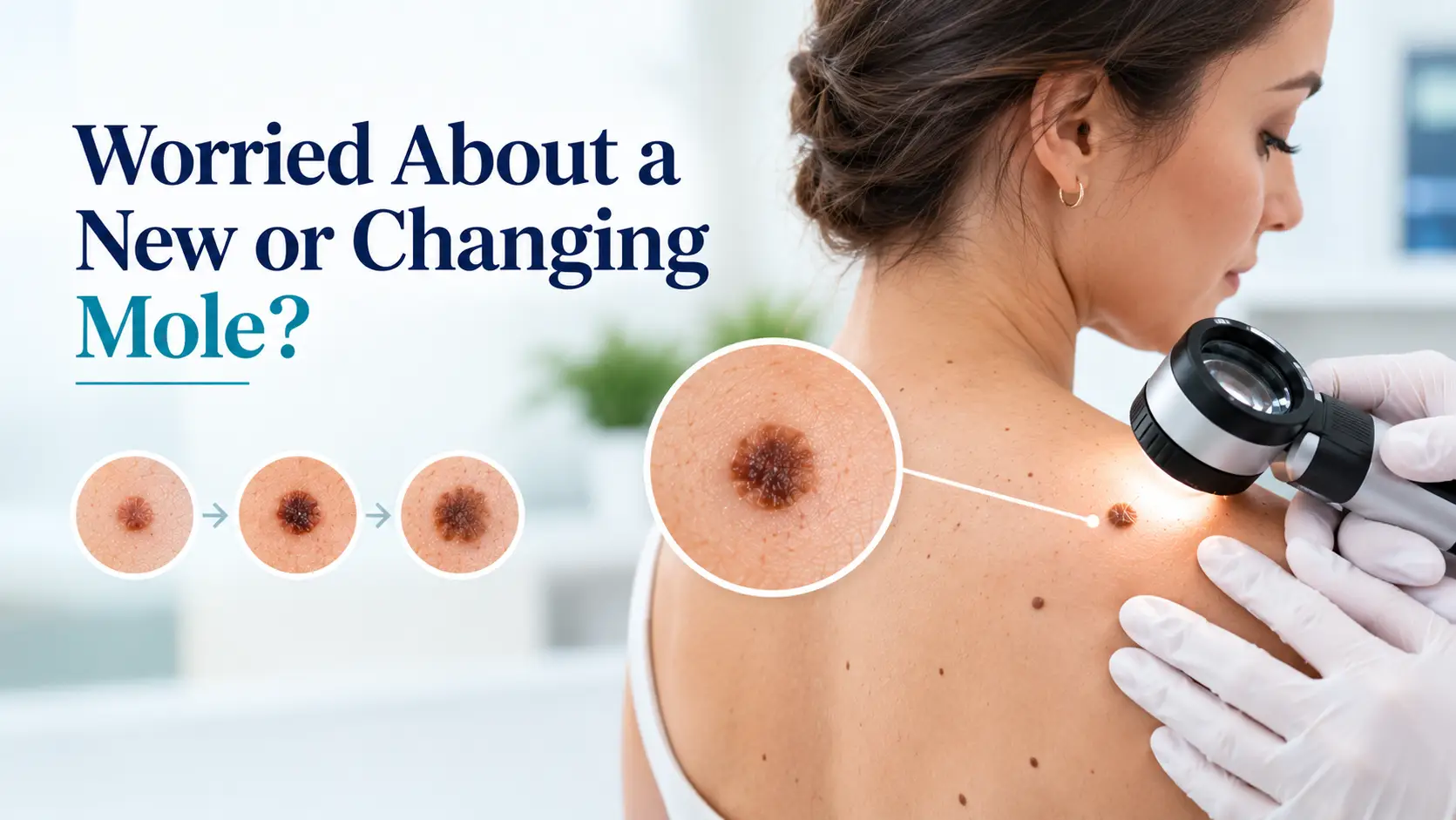
- Evolving: any change in size, shape, colour or feel
See a clinician for a sore that will not heal, bleeding, pain, itching, rapid growth or any sudden change.
How often should you get checked for skin cancer?
How often depends on your personal risk, and your clinician can set a schedule that fits you.
| Check | Typical approach |
|---|---|
| Self-check at home | Regularly, with a mirror or helper for your back and scalp |
| Clinical skin exam | As your clinician advises, based on risk |
| Mole mapping follow-up | Many people return every 6 to 12 months, set by your nurse practitioner |
Mole mapping works alongside a clinical exam, not instead of one.
What happens at your mole mapping appointment?
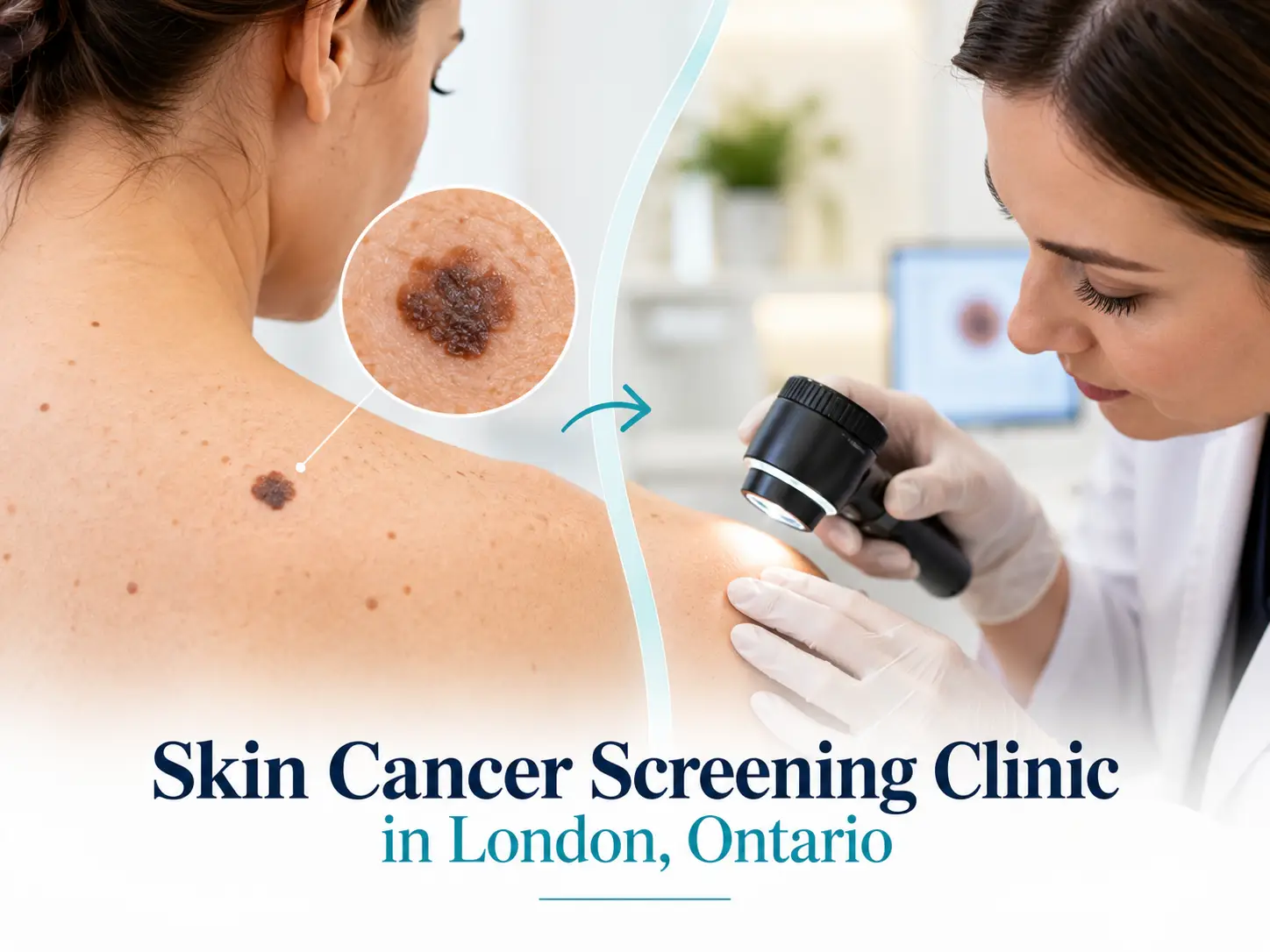
Your visit is quick, private and non-invasive. Nothing breaks the skin. A small handheld dermoscope rests gently on the surface for close-up images.
The four steps
- We talk first. We go over your skin history, risk factors and any moles on your mind.
- Total body imaging. IntelliStudio takes clear, high-resolution photos across your skin.
- Digital dermoscopy. Moles worth a closer look are captured in fine detail under magnification.
- Your baseline. Your images are saved securely and compared at future visits.
How long does it take?
Most visits run about 30 to 45 minutes, depending on how many moles we document.
How to prepare for a digital dermoscopy appointment
- Come with clean skin
- Skip makeup, foundation and nail polish
- Leave self-tanner off for about two weeks before your visit
- Take off jewellery and tie long hair back
- Wear underwear you are comfortable being photographed in
- Skip dark socks, and shave areas where hair hides the skin if you can
- Write down any moles you want us to pay attention to
Are your photos private?
Yes. Your images are stored securely and kept private as your personal skin baseline.
Is it safe in pregnancy?
Yes. No radiation is involved and nothing goes beneath the skin.
What happens after the scan?
Your nurse practitioner goes through the images with you. If anything looks worth checking further, they explain the next step, which might be a biopsy or a referral.
If a mole needs removal, that is a separate procedure. See our mole removal service or our guide to mole removal in London, Ontario.
How much does a skin scan cost in London, Ontario?
A full digital skin imaging appointment at South London Mole Clinic costs $695 + HST, paid when you book. Please confirm the current fee at booking.
| Question | Answer |
|---|---|
| Price | $695 + HST |
| Payment | Taken at booking |
| OHIP | Not covered, private service |
| Extended health plans | Many may reimburse, so ask your insurer |
| Referral needed | No |
For more detail, read our posts on mole mapping cost in London, Ontario and whether mole mapping is covered by OHIP.
How do you decide if the cost is worth it?
Ask yourself three questions:
- Do I have risk factors or many moles that are hard to track?
- Would a photo baseline help me and my clinician notice change?
- Can I commit to follow-up visits so the baseline stays useful?
If you answer yes to most, a consultation may be a good next step. A baseline gains value when you compare it over time.
Can you claim it through insurance?
Many extended health plans may reimburse it. Check your plan details or ask your insurer before booking.
Mole mapping, a dermatologist or your family doctor: which is right?
Each option serves a different need, and they often work together.
| Option | Best for |
|---|---|
| Mole mapping at a private clinic | Tracking moles over time, no referral needed |
| Your primary care provider | A routine check or a first look at a concern |
| Dermatologist via referral | Specialist assessment, usually through a referral |
Read more in our comparison of a private mole clinic vs dermatologist referral in Ontario.
How do you choose a body scan clinic for skin cancer?
Choose a clinic that is honest about what the scan can and cannot do. Equipment matters less than who reviews your images and what happens next.
A quick checklist
- A qualified clinician reviews your images
- Dermoscopy is part of the visit, not just photos
- Photos follow the same process every visit
- Images are stored securely and kept private
- There is a clear path to biopsy or referral
- The clinic states the limits of the scan
- Pricing is clear before you book
Questions to ask before you book
- Who reviews my images?
- What happens if something looks suspicious?
- Do you store my images, and for how long?
- What does the fee include?
- How often do you suggest follow-ups?
What should you look for in a device?
Look for total body photography paired with dermoscopy. Brand matters less than consistent imaging and a trained reviewer. Our clinic uses IntelliStudio.
Clinic-based vs mobile services
Some providers offer mobile screening. We are clinic-based, so your appointment happens at our London location.
How to read clinic reviews
- Look for comments on clear explanations and follow-up
- Check that reviews describe the process, not only the staff
- Read a mix of recent and older reviews
- Be careful with any claim that sounds absolute
What can you do between visits?
Simple habits support your skin health between appointments:
- Check your skin regularly and note any changes
- Use shade, protective clothing and sunscreen
- Avoid tanning beds
- Book an in-person exam if a spot changes, bleeds or grows quickly
Myths and facts about digital skin scans
| Myth | Fact |
|---|---|
| A body scan diagnoses skin cancer | It tracks change. A biopsy diagnoses |
| A clear scan means I am safe forever | It shows one point in time |
| Mole mapping removes moles | It photographs and monitors them |
| It replaces my skin exam | It works alongside a clinical exam |
| It hurts | It is non-invasive |
Body scan for skin cancer in London, Ontario at South London Mole Clinic
At South London Mole Clinic, we focus on mole mapping and digital skin imaging in a nurse practitioner-led clinic founded by Pinkal Gandhi. Your visit includes:
- High-resolution total body photography
- Polarised light digital dermoscopy
- Side-by-side comparison at every visit
- Secure, private image storage
- A review with your nurse practitioner
- No referral needed
Address: 561 Southdale Rd E #10, London, ON N6E 3M2
Phone: (519) 800-4518
Email: info@southlondonmoleclinic.ca
Learn more on our mole mapping and digital skin imaging page.
Frequently asked questions
1. Is mole mapping a skin cancer screening?
Not exactly. It tracks your existing moles over time so changes get caught early. It is a monitoring tool, not a diagnosis.
2. What is a full body scan for skin cancer detection?
It is a set of high-resolution skin photos plus dermoscopy, compared over time. It supports early detection but does not diagnose.
3. How much does a body scan for skin cancer cost?
At our clinic, it costs $695 + HST, paid at booking. Prices vary between clinics.
4. Does OHIP cover it?
No. It is a private service. Some extended health plans may reimburse it.
5. Do I need a referral?
No. You can book directly online or by phone.
6. How often should I get checked?
Many people return every 6 to 12 months. Your nurse practitioner will suggest timing based on your risk.
7. Does it replace a regular skin check?
No. It works alongside a clinical exam, not in place of one.
8. Does it hurt, and is it safe in pregnancy?
It does not hurt, and nothing breaks the skin. It is safe in pregnancy because no radiation is involved.
Next step
If you want a baseline of your skin, or a mole concerns you, we can help you decide what fits.
- Book a mole mapping appointment
- Call (519) 800-4518
- Visit our home page
This article is general information, not medical advice. Digital skin imaging is a monitoring tool and does not diagnose skin cancer. See a clinician in person for pain, bleeding, infection, rapid growth or any sudden change. Whether mole mapping suits you depends on a clinical consultation.



Leave A Comment