
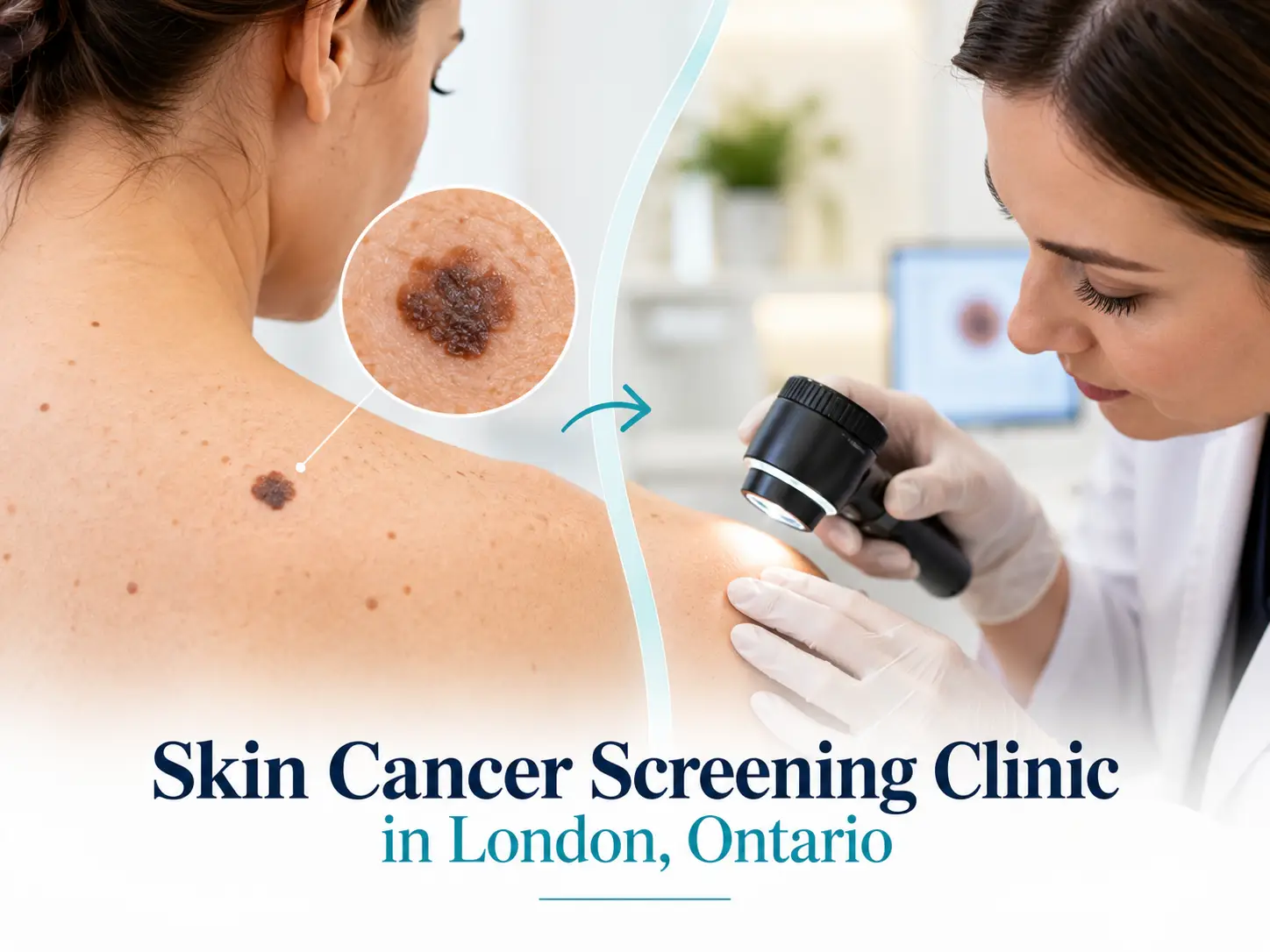
If you are looking for a skin cancer screening clinic in London, Ontario, South London Mole Clinic offers nurse practitioner-led skin assessment and digital mole mapping with no referral needed.
Mole mapping records and monitors your moles over time, while any diagnosis comes from a clinical assessment and, when needed, a biopsy.
TL;DR
- You can book directly online or call (519) 800-4518. No referral is needed.
- The appointment includes a consultation, total body imaging, digital dermoscopy and a secure baseline. It usually takes 30 to 45 minutes.
- Mole mapping is a monitoring tool. It is not a diagnostic test and does not replace a clinical skin exam or a biopsy.
- The fee is $695 + HST, paid at booking. It is a private service and OHIP does not cover it. Some extended health plans may reimburse it.
- A new, changing, bleeding or painful mole needs prompt assessment. Do not wait for a routine monitoring visit.
What Is a Skin Cancer Screening, and What Does a Clinic Do?
A skin cancer screening is a check of your skin and moles by a trained clinician to find spots that may need a closer look.
At South London Mole Clinic, nurse practitioners lead this process and pair it with digital mole mapping.
What the process includes
- A conversation about your skin history, risk factors and the moles that concern you
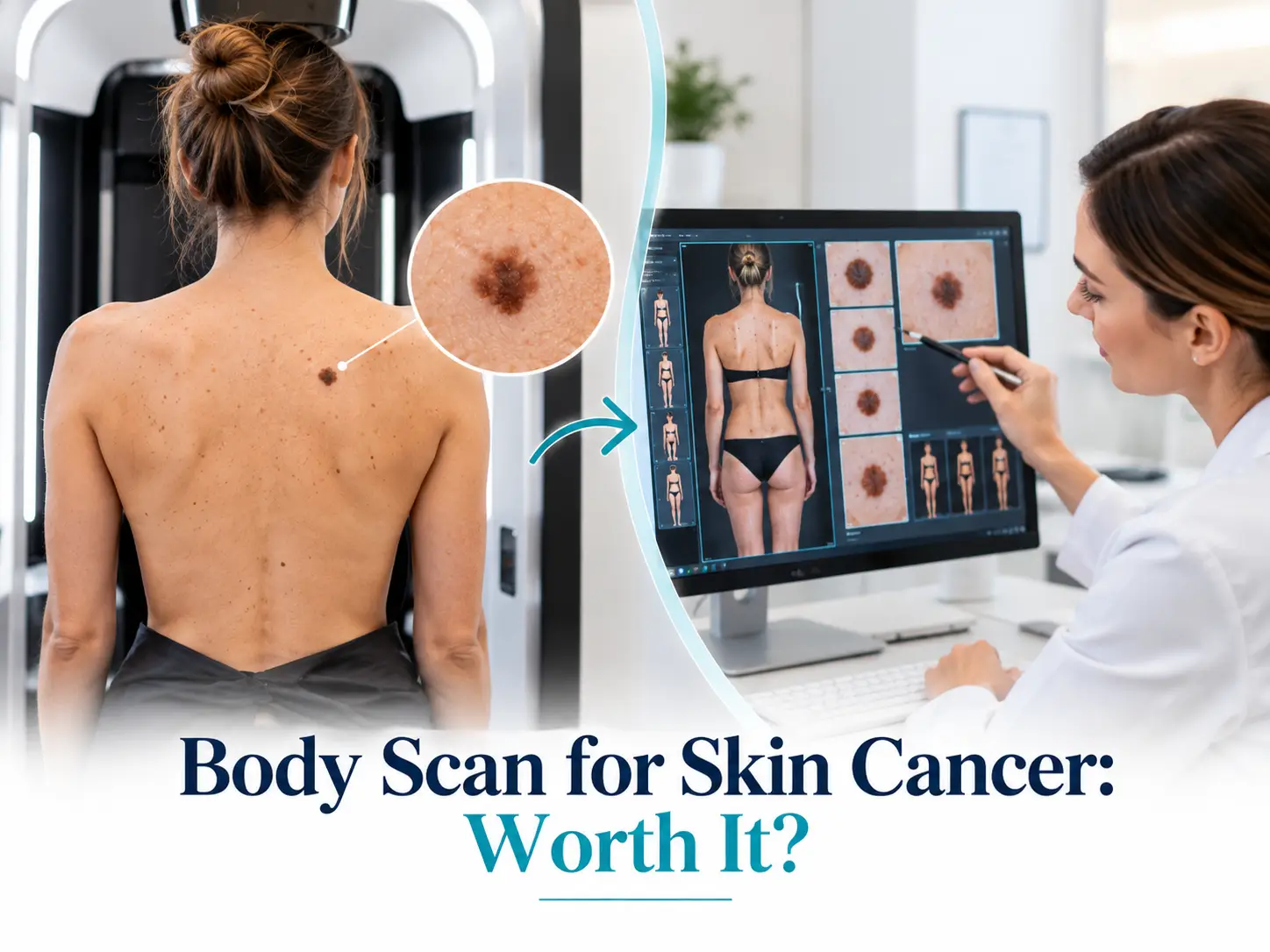
- High-resolution total body photography
- Polarised light digital dermoscopy of moles that need closer review
- A secure baseline for comparison at future visits
- A discussion of next steps, which may include monitoring, a biopsy or a referral
What it cannot do
- Imaging cannot confirm that you are free of skin cancer. Digital skin imaging supports early detection and record keeping, but it is not a diagnostic test.
- A biopsy is the step that can confirm a diagnosis. Your nurse practitioner decides whether a biopsy or referral makes sense for a specific mole.
Why people book one
The Canadian Cancer Society estimates that 11,300 people in Canada will be diagnosed with melanoma and 1,250 will die from it.
Melanoma is not the only skin cancer, and regular checks give your clinician a chance to notice changes sooner. Our guide on why early skin cancer detection matters explains the reasoning.
Who Should Consider Skin Cancer Screening in London, Ontario?
Skin cancer screening and mole mapping suit people with features that raise the value of regular, documented checks. The clinic lists these situations:
- You have 50 or more moles, or moles that look large or irregular
- You or a close relative has had melanoma or another skin cancer
- You have fair skin, freckles or red hair and burn easily
- You had heavy sun exposure as a child, past sunburns, or used tanning beds
- You have moles in places that are hard to watch yourself, such as your back or scalp
- Your immune system is weakened, or you take medication that lowers it
Example: A person with a parent who had melanoma and many moles on their back cannot see those moles without help. A professional baseline and a scheduled recheck give that person a practical way to stay on top of changes.
Mole mapping does not suit every situation. Whether it makes sense for you depends on a clinical consultation.
Pro tip: Write down your family history before you arrive. Which relative, which type of skin cancer and roughly when helps your nurse practitioner judge your risk.
Which Signs Mean You Should Get a Mole Checked Sooner?
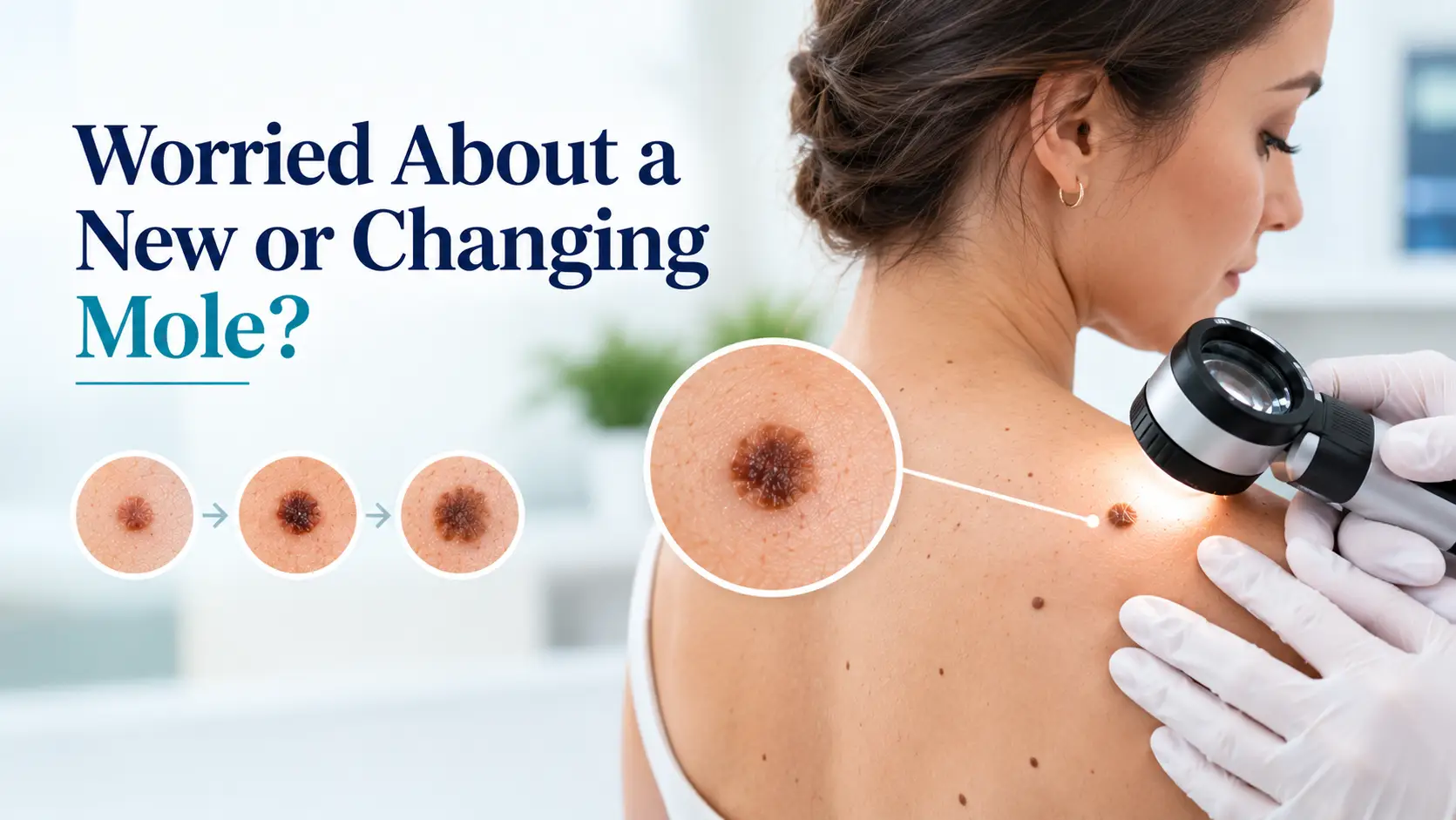
Book an assessment promptly if a mole is new, changing, bleeding, itching, painful or growing quickly. Mole mapping is for monitoring. It is not a reason to delay care for a symptom.
Clinicians often use the ABCDE checklist as a general guide:
- Asymmetry: one half does not match the other
- Border: the edge looks uneven, ragged or blurred
- Colour: the mole has several shades or an unusual colour
- Diameter: the mole is larger than a pencil eraser, or keeps growing
- Evolving: the mole changes in size, shape, colour or feel
One feature does not mean a mole is cancer, and a mole with none of them can still need review. The Canadian Cancer Society explains how to check your skin at home.
What is an atypical (dysplastic) mole?
- An atypical mole, also called a dysplastic nevus, is a mole that looks different from a common one. It may be larger, with an uneven border or mixed colour.
- Having an atypical mole does not mean you have skin cancer. Clinicians often choose to monitor these moles over time,
- which is one reason a photo baseline helps. Your nurse practitioner can tell you how to follow yours.
- Seek in-person care for pain, bleeding, signs of infection, rapid growth or any change you cannot explain.
What to Expect at Your Skin Cancer Screening Appointment
Your appointment follows four steps and usually takes 30 to 45 minutes, depending on how many moles the team documents. Nothing breaks the skin.
Step 1: We talk first
- Your nurse practitioner reviews your skin history, your risk factors and any moles on your mind.
- Mention anything you have noticed, such as a spot that itches, bleeds or looks different from your other moles.
Step 2: Total body imaging
The IntelliStudio imaging system takes clear, high-resolution photos across your skin. The team photographs every visit the same way, so images line up for comparison later.
Step 3: Digital dermoscopy
Moles that deserve a closer look are captured under polarised light at high magnification. A small handheld dermoscope rests gently on the skin. It does not hurt.
Step 4: Your baseline and next steps
- The clinic stores your images securely and privately as your personal baseline. Your nurse practitioner goes through the images with you.
- If anything looks worth checking further, you receive an explanation of the next step. That may be a biopsy or a referral.
- Mapping uses no radiation and nothing goes beneath the skin, so the clinic lists it as safe during pregnancy.
Pro tip: Point out every mole you worry about during step 1, even if it seems minor. The team can then prioritize those spots for closer images.
Mole Mapping vs Skin Cancer Screening vs Biopsy: What Is the Difference?
These three steps do different jobs, and they work best together. Mole mapping documents, a clinical assessment interprets, and a biopsy can confirm.
| Mole mapping | Clinical skin assessment | Biopsy | |
|---|---|---|---|
| What it does | Photographs and records your moles to build a comparison baseline | Reviews your skin, history and moles of concern | Samples a mole so the tissue can be examined |
| What it cannot do | Diagnose or replace a clinical exam | Confirm a diagnosis by eye alone | Replace ongoing monitoring of your other moles |
| When it happens | Booked as a private appointment, then repeated over time | At your appointment | Only when the clinician judges it appropriate |
Does mole mapping detect skin cancer?
No. Mole mapping makes changes easier to see, and your nurse practitioner interprets them. That is why the clinic describes it as a tool for monitoring and early detection support, not a diagnostic test.
Is mole mapping a skin cancer screening?
Not on its own. Mapping is the documentation part of your visit. The clinical judgement comes from your nurse practitioner, and a biopsy is what confirms a diagnosis.
You can read the full service description on our mole mapping and digital skin imaging page.
How Should You Prepare for Your Skin Check?
Arrive with clean, product-free skin and a short list of moles you want reviewed. Simple preparation makes the images clearer and easier to compare later.
- Skip makeup, foundation and nail polish on the day
- Leave self-tanner off for about two weeks before your visit
- Remove jewellery and tie long hair back
- Wear underwear you are comfortable being photographed in
- Skip dark socks, and shave areas where hair hides the skin if you can
- Write down the moles you want the team to pay attention to
Example: A patient arrives with self-tanner still on their back. The tan hides the natural colour of moles, so the team may not capture a clean baseline. Two weeks without tanner avoids that.
What If You Only Have One Mole You Are Worried About?
Mole mapping documents your whole body, so it suits people who want a full baseline. If one specific mole worries you, say so when you contact the clinic.
The team can tell you which appointment fits a single concern. A mole that is bleeding, painful or changing quickly should be assessed promptly, and you should not wait for a routine mapping visit.
If you are considering removal, the clinic also offers mole removal in London, Ontario. A professional assessment comes first, and removal does not mean a mole is cancer.
How Much Does a Skin Cancer Screening Cost in London, Ontario, and Does OHIP Cover It?
A full digital skin imaging appointment at South London Mole Clinic costs $695 + HST, and the clinic takes payment when you book. This is a private service, so OHIP does not cover it.
The fee covers the full digital skin imaging appointment with IntelliStudio, including the consultation, total body photography, digital dermoscopy and secure storage of your baseline.
Further services such as a biopsy or mole removal are separate and may carry their own fees.
Many extended health plans reimburse part or all of private services. Coverage depends on your individual policy, so check before you book.
Ask your insurer:
- Does my plan cover digital skin imaging or mole mapping?
- Does a nurse practitioner-led service qualify?
- Do I need a referral or pre-approval?
- What receipt wording do you require?
- Can I claim it through a health spending account?
For more detail, read our breakdown of mole mapping cost in London, Ontario and our guide on whether OHIP or insurance covers mole mapping. Current clinic fees are on the price page.
How Do You Compare Skin Cancer Screening Clinics in Ontario?
Compare clinics on who examines you, what imaging they use, what the visit includes, what happens after a concerning finding and what you pay in total. Fees and inclusions vary between clinics, so ask the same questions of each one.
| Question to ask any clinic | Why it matters | What South London Mole Clinic states |
|---|---|---|
| Who assesses my skin? | Qualifications shape clinical judgement | Qualified nurse practitioners |
| What imaging do you use? | Standardized capture makes follow-up photos comparable | IntelliStudio total body photography and polarised light dermoscopy |
| Do I need a referral? | A referral adds time | No referral needed |
| What happens if a mole looks suspicious? | You need a clear next step | Biopsy or referral, when your assessment supports it |
| What does the fee include? | Surprises add stress | $695 + HST for the full imaging appointment, paid at booking |
| How do you store my images? | Images are health information | Stored securely and kept private |
Ask what the fee covers rather than comparing price alone. A lower fee and a higher fee may include different things.
Are There Free or OHIP-Covered Options for Skin Checks?
Yes, other pathways exist, and each has a different trade-off between cost, wait and access. A responsible clinic tells you about them.
- Dermatologist referral: Your family doctor or nurse practitioner can refer you for specialist care that may follow the OHIP pathway. Waits and triage vary.
- Free skin checks: Melanoma Canada lists the Mole Mobile, which offers free skin checks in Alberta, British Columbia, Ontario and Quebec. Locations and dates change, so check its schedule.
- Rapid access and mole mapping directories: Melanoma Canada keeps a directory of rapid access clinics, mole mapping clinics and skin cancer specialists across Canada. You can browse it on its find a dermatologist page.
A private appointment does not stop you from asking for a referral too. It also never replaces medically recommended specialist care. For a fuller comparison, see private mole clinic vs dermatologist referral in Ontario.
How Often Should You Get a Skin Check?
- Many people return every 6 to 12 months to compare new images against their baseline. Your nurse practitioner suggests a timing that fits your risk.
- A person with many moles and a family history may return on the shorter end of that range.
- Someone with fewer moles and lower risk may return less often. Only a clinical conversation can set that interval.
- Between visits, check your skin at home, write down moles you are watching, and book sooner if a mole changes, bleeds or itches.
Why Choose South London Mole Clinic for Skin Cancer Screening?
South London Mole Clinic gives people in London, Ontario a local, private way to document and monitor their moles with nurse practitioner oversight. Pinkal Gandhi founded the clinic, and it focuses on safe, professional and compassionate care.
- Nurse practitioner-led: qualified nurse practitioners carry out your appointment
- No referral: you book directly
- Dedicated imaging: IntelliStudio provides total body photography and polarised light dermoscopy
- Private records: the clinic stores your images securely as your personal baseline
- Clear next steps: biopsy or referral is available when your assessment supports it
- Honest advice: the clinic promises no-pressure consultations and no hidden costs
You can learn more about the team on our About page.
The clinic sits at 561 Southdale Rd E #10, London, ON N6E 3M2, and serves patients across London and surrounding communities.
How Do You Book a Skin Cancer Screening in London, Ontario?
You can book online in a few minutes, or call the clinic. No referral is required.
- Book your mole mapping appointment online
- Pay at booking ($695 + HST)
- Follow the preparation steps above
- Arrive with your list of moles and your family history notes
Prefer to talk first? Call (519) 800-4518 or use the contact page.
Frequently Asked Questions
1. Do I need a referral for a skin check in London, Ontario?
No. South London Mole Clinic accepts direct bookings for mole mapping with no referral. If your assessment shows you need further care, your nurse practitioner explains the next step, which may include a referral.
2. Is mole mapping the same as a skin cancer screening?
Not exactly. Mole mapping photographs and tracks your existing moles so changes are easier to see. It is a monitoring tool, and your nurse practitioner’s assessment and any biopsy provide the clinical answers.
3. How much does it cost, and does OHIP cover it?
The appointment costs $695 + HST, paid at booking. OHIP does not cover it because it is a private service, but some extended health plans may reimburse it.
4. What if I only want one mole checked?
Tell the clinic when you contact them, and the team will explain which appointment suits a single concern. Do not wait if the mole is bleeding, painful or changing quickly.
5. What happens if a mole looks suspicious?
Your nurse practitioner explains what they see and recommends a next step, such as a biopsy or a referral. You do not need to wait for a routine visit if a mole changes, bleeds or hurts.
Book Your Skin Cancer Screening in London, Ontario
Build a clear picture of your skin today and follow it with confidence. Book your appointment or call (519) 800-4518 to speak with the team.
Want to read more first? Start with our guides on early skin cancer detection and mole mapping cost, or browse the Knowledge Center.
This article is general information, not medical advice. It does not replace a clinical skin exam or a personal assessment. Seek prompt in-person care for pain, bleeding, infection, rapid growth or any sudden change in a mole.



Leave A Comment