Skin Cancer Check in London, Ontario: Who Can Do It and When You Should Book One
Not sure who can check your skin? See who can do a skin cancer check in London, Ontario, when to book one and what to expect at your visit. (139 characters)
Pinkal Gandhi10 min read
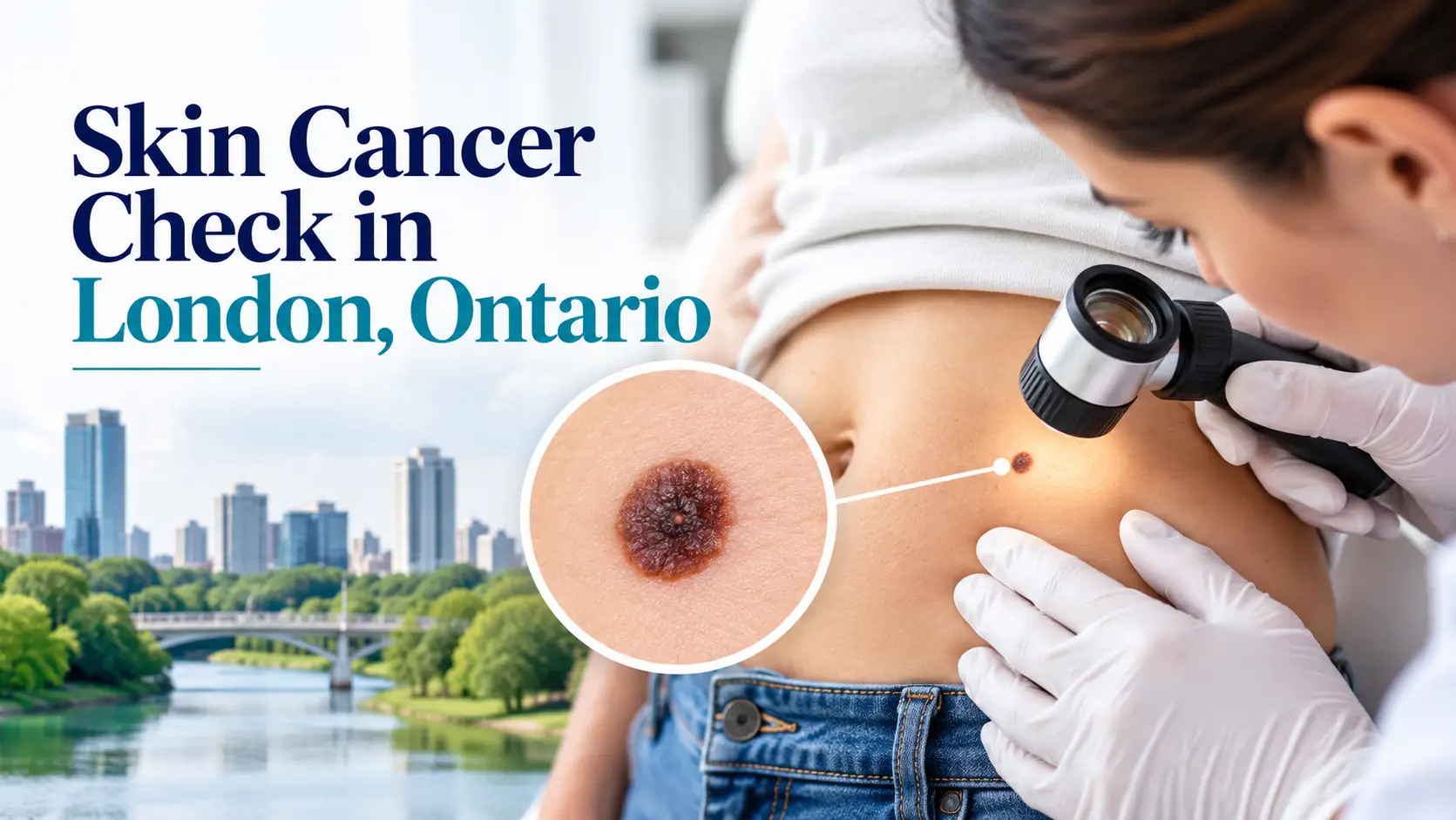
In London, Ontario, a skin cancer check can be done by a family doctor, a dermatologist (usually by referral) or a nurse practitioner at a skin clinic. Book promptly if a mole is new, changing or bleeding. Book ahead if you have many moles, fair skin or a family history of melanoma.
Only a biopsy can confirm skin cancer, so a check or a photo cannot diagnose it alone. At South London Mole Clinic, our nurse practitioners offer mole mapping without a referral. It tracks changes over time and is not a diagnostic test. It costs $695 + HST and OHIP does not cover it.
This guide is general information, not medical advice.
TL;DR
Family doctors, dermatologists and nurse practitioners can all check your skin. The right fit depends on your concern and how you want to access care.
Book soon for a new, changing, bleeding or unusual mole. Do not wait for a routine slot.
Book ahead if you have risk factors, such as 50 or more moles or a close relative with melanoma.
At South London Mole Clinic, mole mapping needs no referral. It costs $695 + HST and OHIP does not cover it.
Apps and photo services can help you track changes, but they cannot diagnose a mole.
What Is a Skin Cancer Check?
A skin cancer check is a close look at your skin by a trained clinician to find moles or marks that may need a second look.
The clinician reviews the size, shape, colour, border and surface of each spot. They may also use a dermoscope.
This is a handheld magnifier with a light that shows detail just beneath the skin surface.
Example: You notice a freckle on your shoulder that looks darker than it did last summer. A check lets a clinician compare it with your other spots and decide whether it needs monitoring, a biopsy or a referral.
Skin check, screening, mole mapping and biopsy: what is the difference?
These four terms overlap, but each one does a different job.
Term | What it means | Can it diagnose? |
|---|---|---|
Skin check | A clinician examines your skin | No, it flags spots to follow up |
Skin cancer screening | Looking for problems before symptoms appear | No, it flags spots to follow up |
Mole mapping | Photos and dermoscopy compared over time | No |
Biopsy | A small sample tested in a lab | Yes |
Only a biopsy can confirm skin cancer. A clinical exam or a photo cannot.
Who Can Do a Skin Cancer Check in London, Ontario?
You have three main options: a family doctor or walk-in clinic, a dermatologist, or a nurse practitioner-led skin clinic.
Provider | How you usually get in | Best for |
|---|---|---|
Family doctor or walk-in clinic | Book or visit directly | A first look at one spot |
Dermatologist | Usually a referral | Specialist care |
Nurse practitioner-led clinic | Often direct booking | Mole review and monitoring |
1. Family doctor or walk-in clinic
A family doctor or walk-in clinic is a practical first stop for a single spot that worries you.
They can examine it and refer you on if needed. Availability and wait times vary, so call ahead.
Example: A mole on your shin bleeds after shaving. A quick visit to a walk-in clinic can tell you whether it needs further assessment.
2. Dermatologist
A dermatologist provides specialist skin care, and a visit usually starts with a referral from a primary care provider.
Ask the office whether they are accepting referrals and how long intake takes.
Our guide to a private mole clinic vs a dermatologist referral in Ontario compares the two paths in detail.
3. Nurse practitioner-led skin clinic
A nurse practitioner-led clinic gives you direct access to a skin review without a referral.
At South London Mole Clinic, our nurse practitioners lead your care. The clinic was founded by Pinkal Gandhi and sits on Southdale Rd E in London.
You book mole mapping and digital skin imaging directly, with no referral.
This is a private service.
If something looks worth checking, your nurse practitioner explains the next step, such as a biopsy or a referral.
Can You Get a Skin Cancer Check Online or With an App?
Apps and online photo services can help you track your skin, but they cannot replace an in-person exam.
What they do well
They store your photos in one place.
They remind you to recheck.
They help you show a clinician how a spot has changed.
Where they fall short
Photo quality and lighting change the colour of a mole.
A phone camera cannot see beneath the skin surface the way a dermoscope can.
An app cannot diagnose, and a "low risk" result can give false comfort.
Example: You photograph a mole in a dim bathroom, and the colour looks even. In daylight, the edge looks uneven. Poor lighting hid the detail.
Pro tip: Take your photos in the same light, from the same distance, once a month. Bring them to your appointment.
When Should You Book a Skin Cancer Check?
Book promptly when a mole changes, and book a routine check when your risk factors are higher than average.
Book soon if you notice any of these
A new mole that looks different from the rest.
A mole that changes in size, shape or colour.
A spot that bleeds, itches, crusts or does not heal.
One mole that stands out from your others, sometimes called the "ugly duckling".
The Canadian Cancer Society explains how to check your own skin. Many clinicians use the ABCDE guide as a starting point.
Letter | What to watch for |
|---|---|
A | Asymmetry: one half looks different from the other |
B | Border: edges look ragged or blurred |
C | Colour: more than one shade |
D | Diameter: larger than a pencil eraser |
E | Evolving: any change over time |
For more on what changes can look like, read this guide on the early signs of skin cancer.
Book ahead if you have risk factors
Some risk factors make regular checks more worthwhile.
50 or more moles, or moles that look large or irregular.
You or a close relative had melanoma or another skin cancer.
Fair skin, freckles or red hair, and you burn easily.
Heavy childhood sun, past sunburns or tanning bed use.
Moles in places you cannot see, like your back or scalp.
A weakened immune system, or medication that lowers immunity.
Mole count is only one piece. A guide on how many moles is too many explains why change and type often matter more than the total. You can also read about the dysplastic nevus, an atypical mole that clinicians watch closely.
Example: Someone with fair skin, a parent who had melanoma and moles across the upper back is a good candidate to book ahead. They cannot easily see their own back.
How often should you get checked?
The right interval depends on your risk, so there is no single schedule for everyone.
Many people return for mole mapping every 6 to 12 months to compare new photos with their baseline.
Your nurse practitioner suggests a timing that suits you. Read why early skin cancer detection matters for the bigger picture.
When not to wait for a routine booking
Some changes need prompt in-person assessment, not a routine mole mapping slot.
See a healthcare professional promptly for:
Bleeding without a clear cause.
Pain or tenderness.
Signs of infection.
Sudden change or rapid growth.
Anything unclear that worries you.
What to Expect During a Professional Skin Cancer Check
A professional check is quick, private and painless, and it ends with a clear next step.
Here is how a mole mapping visit works at South London Mole Clinic.
Before your visit
Come with clean skin. Skip makeup, foundation and nail polish.
Avoid self-tanner for about two weeks.
Remove jewellery and tie back long hair.
Wear underwear you feel comfortable being photographed in.
Skip dark socks, and shave areas where hair hides the skin if you can.
Note any moles you want us to look at.
Pro tip: Write your moles of concern in a phone note, with when you first noticed any change. It helps us focus on what matters to you.
During your appointment
Conversation. We review your skin history, risk factors and the moles on your mind.
Total body imaging. Our IntelliStudio system takes high-resolution photos of your skin.
Digital dermoscopy. Moles worth a closer look are captured under magnification with polarised light.
Baseline saved. Your images are stored securely and privately for future comparison.
Nothing breaks the skin. A small handheld dermoscope rests gently on the surface. The visit involves no radiation, and most appointments run about 30 to 45 minutes, depending on how many moles we document.
After your appointment
Your nurse practitioner goes through the images with you.
If a mole needs more attention, they explain the next step. That may be a biopsy or a referral.
At later visits, we compare new photos with your baseline side by side.
Example: At a follow-up, a mole on your back looks slightly larger than in your baseline photo. You would never notice that by memory. Side-by-side images make it clear.
Mole Mapping vs a Skin Cancer Check: Which Do You Need?
A clinical skin exam looks at your skin today, while mole mapping tracks change over time. Some people may benefit from both.
Clinical skin exam | Mole mapping | |
|---|---|---|
Main purpose | Assess spots now | Track changes over time |
How | Clinician examines your skin | Photos and dermoscopy |
Diagnoses? | Can raise concern, biopsy confirms | No |
Best for | A specific worry | Many moles or higher risk |
Mole mapping is a monitoring and record keeping tool. It is not a diagnostic test, and it does not replace a clinical skin exam or a biopsy.
It also differs from removal. Mapping documents your moles. Mole removal in London, Ontario is a separate procedure.
You can read about our mole removal service if a mole needs to come off.
How Much Does a Skin Cancer Check Cost in London, Ontario?
Mole mapping at South London Mole Clinic costs $695 + HST, paid when you book, and OHIP does not cover it.
Pathway | Cost note |
|---|---|
Family doctor or walk-in clinic | May follow the OHIP pathway if eligible |
Dermatologist | May follow the OHIP referral pathway if eligible |
South London Mole Clinic mole mapping | $695 + HST, private pay |
Ask each provider to confirm eligibility and fees before you book.
Can insurance help?
Some extended health plans may reimburse mole mapping, so ask your insurer first.
Does my plan cover digital skin imaging?
Do I need a referral or pre-approval?
What wording do you need on the receipt?
Our guides on whether mole mapping is covered by OHIP and the mole mapping cost in London, Ontario go deeper. You can also view our pricing page.
A biopsy, removal or other services may carry separate fees. Cost should never delay care for a concerning spot.
How to Choose a Skin Cancer Screening Clinic in London, Ontario
Choose a clinic that clearly explains who examines you, what the visit includes and what happens if something looks concerning.
Use this checklist:
Who performs the exam, and what are their qualifications?
Does the visit include dermoscopy and total body photos?
How does the clinic store and protect your images?
What is the plan if a spot looks suspicious?
Do you need a referral?
Is the total price, including HST, clear upfront?
Is the location easy to reach, and is booking simple?
Example: You call two clinics. One answers every question above. The other stays vague on cost and next steps. Clear answers usually signal a clinic that explains things well.
Not sure what to ask? Contact us and we will walk you through the process.
Skin Cancer Check FAQs
1. Do I need a referral for a skin cancer check in London, Ontario?
Not for mole mapping at South London Mole Clinic. A dermatologist visit usually starts with a referral from a primary care provider.
2. Does a skin cancer check hurt?
No. Mole mapping is non-invasive, and nothing breaks your skin. If a biopsy is ever recommended, your nurse practitioner explains that step first.
3. How long does a mole mapping appointment take?
Most visits take about 30 to 45 minutes. The time depends on how many moles we document.
4. Can an app diagnose skin cancer?
No. Apps can help you track changes, but only a clinician can examine a mole and arrange a biopsy if needed.
5. How often should I get my skin checked?
It depends on your risk. Many people return for mole mapping every 6 to 12 months, and your nurse practitioner suggests the timing.
Book Your Skin Cancer Check at South London Mole Clinic
If you want a clear baseline of your moles, you can book mole mapping directly with our nurse practitioners.
Call (519) 800-4518
Visit us at 561 Southdale Rd E #10, London, ON N6E 3M2
Want to read more first? Start with why early skin cancer detection matters.
Mole mapping is not a diagnostic test. Whether it suits you depends on a clinical consultation. See a healthcare professional in person promptly for pain, bleeding, infection, sudden change, rapid growth or unclear symptoms.